BehaviorUX
A Methodology + Canvas for Behavior-Driven Product Design
Challenge
Behavioral science insights have the potential to direct and shape innovation, but they are rarely integrated into the design and development process.
This leads to a lack of evidence-based design that weakens the foundation for developing new and innovative products, services, and experiences.
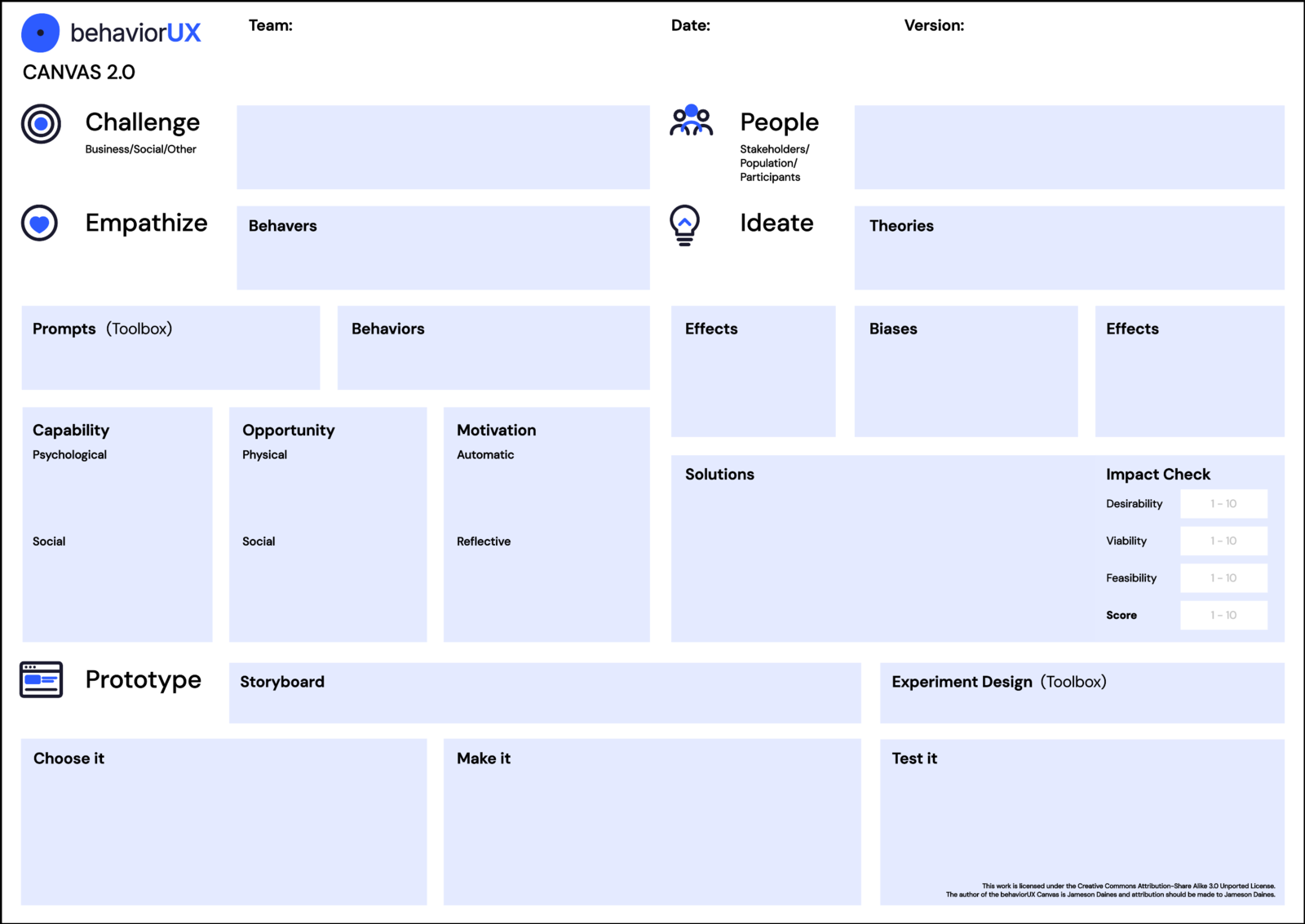
BehaviorUX provides a methodology, canvas, and toolbox that give product teams a rigorous and insightful foundation to transform business problems into high-impact, evidence-based solutions.
Service Strategy
Research (Theory Dev.)
I interviewed and surveyed business leaders and observed design thinking sessions in person to uncover insights into innovative behaviors.
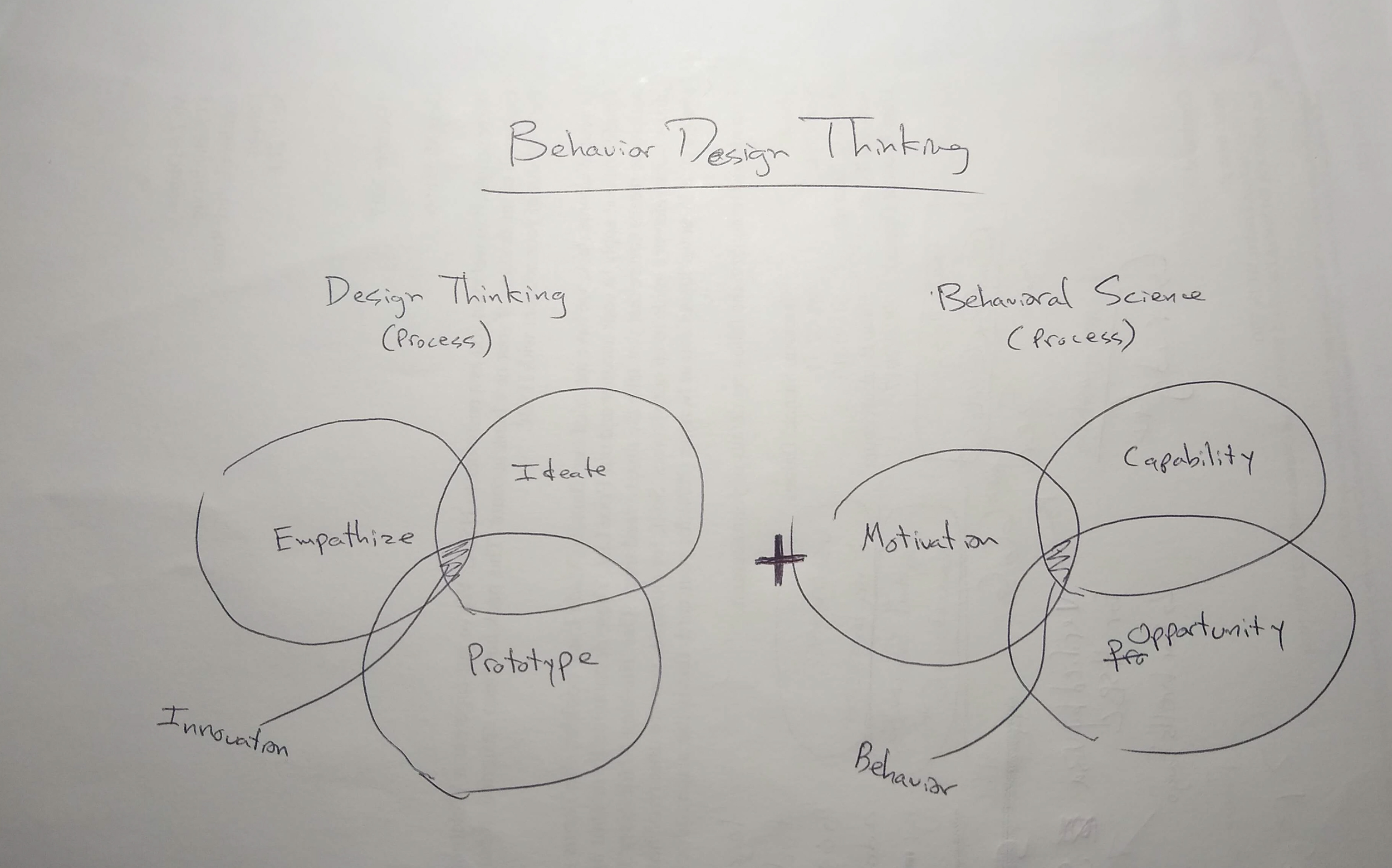
Using research insights, I developed a methodology that integrates design thinking with behavioral science research processes, originally under the working name "Behavior Design Thinking", which evolved into what is now BehaviorUX.
I iterated and refined the methodology using usability testing (observation) and feedback from workshops, including with a large international insurance company.
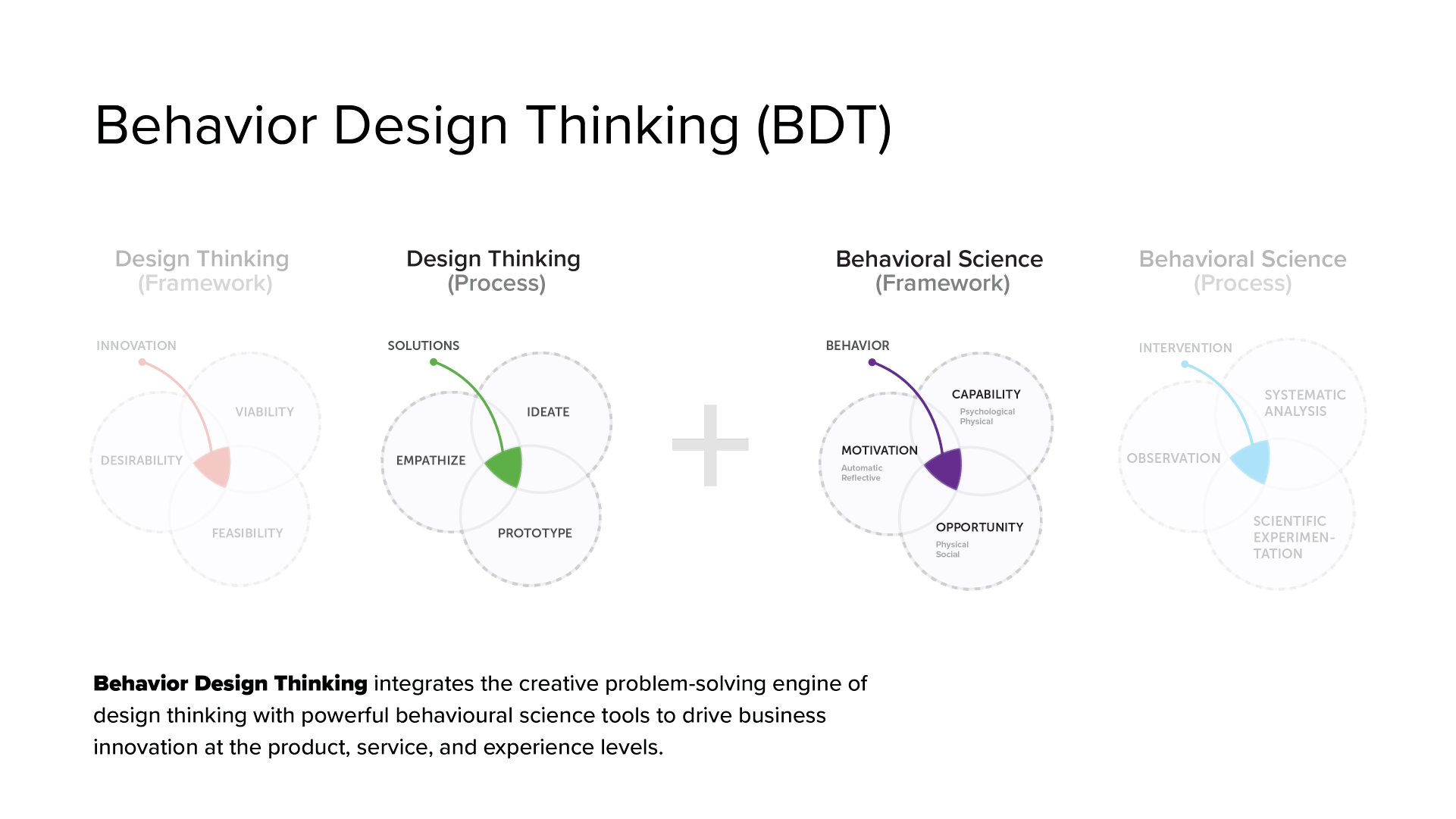
Wireframes
I designed and tested two low-fidelity digital canvas prototypes with real teams during live workshops, originally branded "Behavior Design Canvas".
Based on user feedback, we learned that the canvas was insightful but needed to be simplified in order to be utilized more quickly in team meetings.
Iterations of the canvas reflected this feedback, and the final prototype was co-created with innovation teams to maximize its potential to quickly and intuitively produce and test new ideas in organizations.
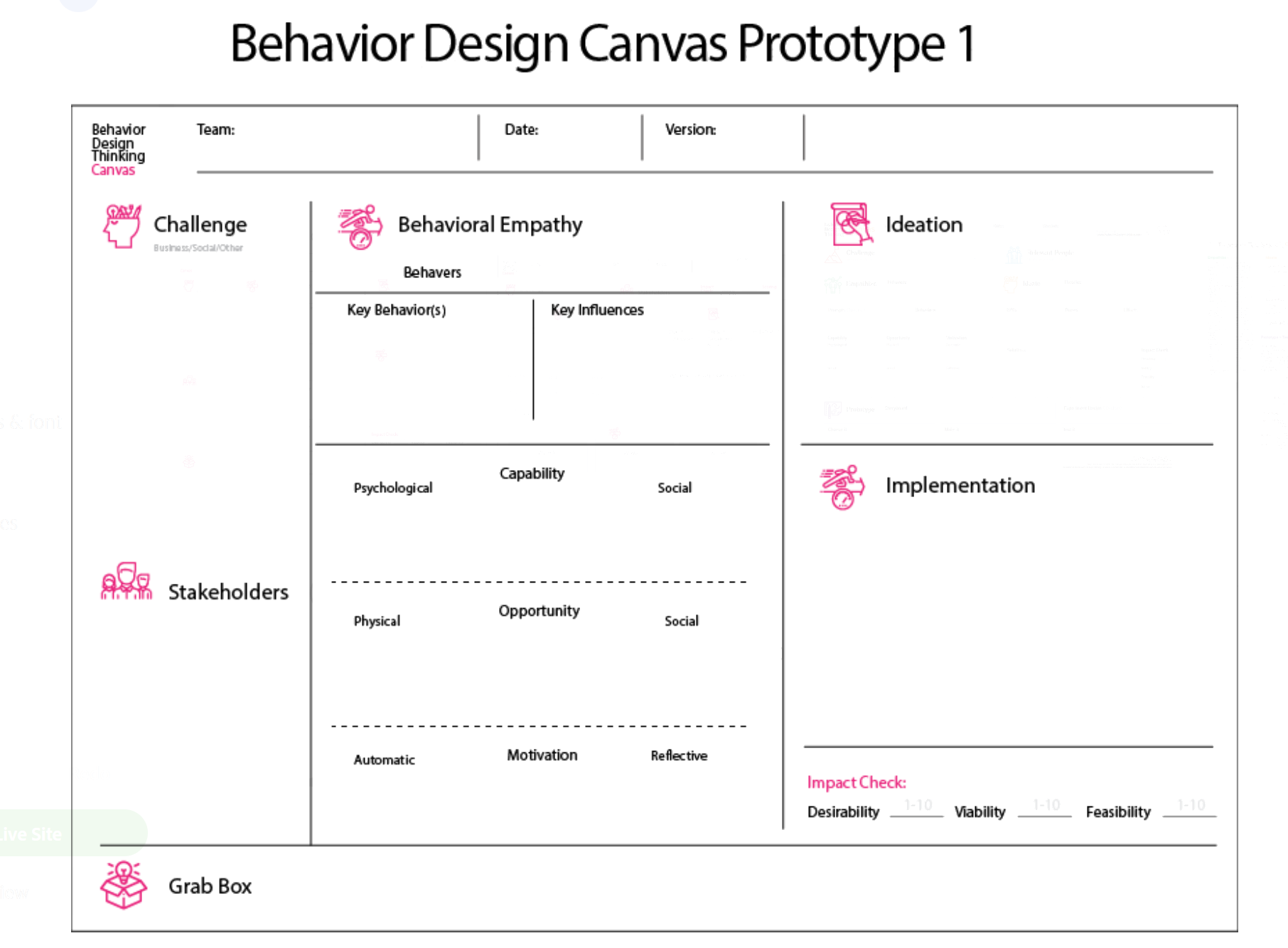
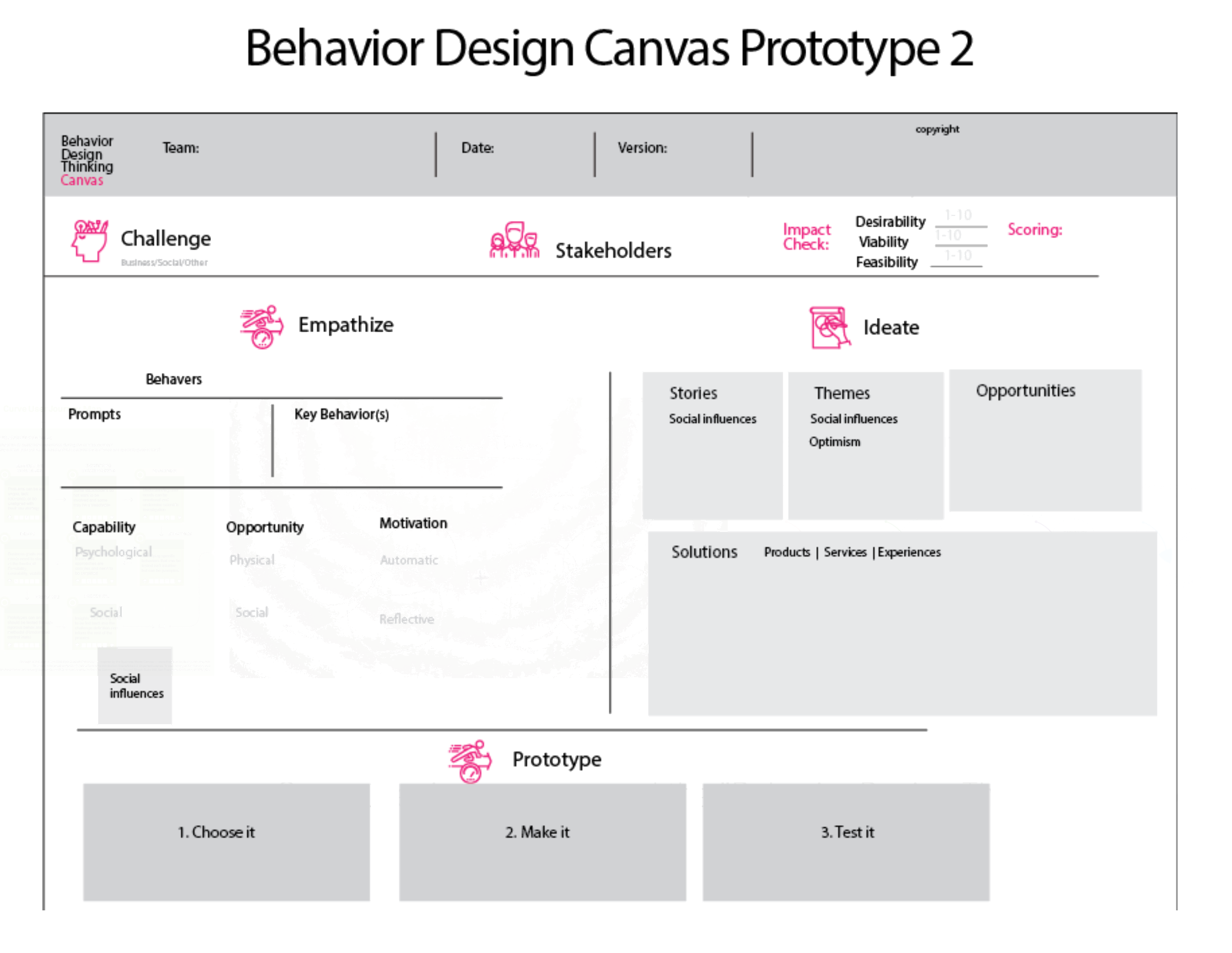
Final Prototype
The final BehaviorUX Canvas is available as a free PDF download alongside the BehaviorUX Toolbox of behavior-change techniques. It is the direct successor of the "Behavior Design Thinking" canvas, refined and rebranded for the consulting practice.
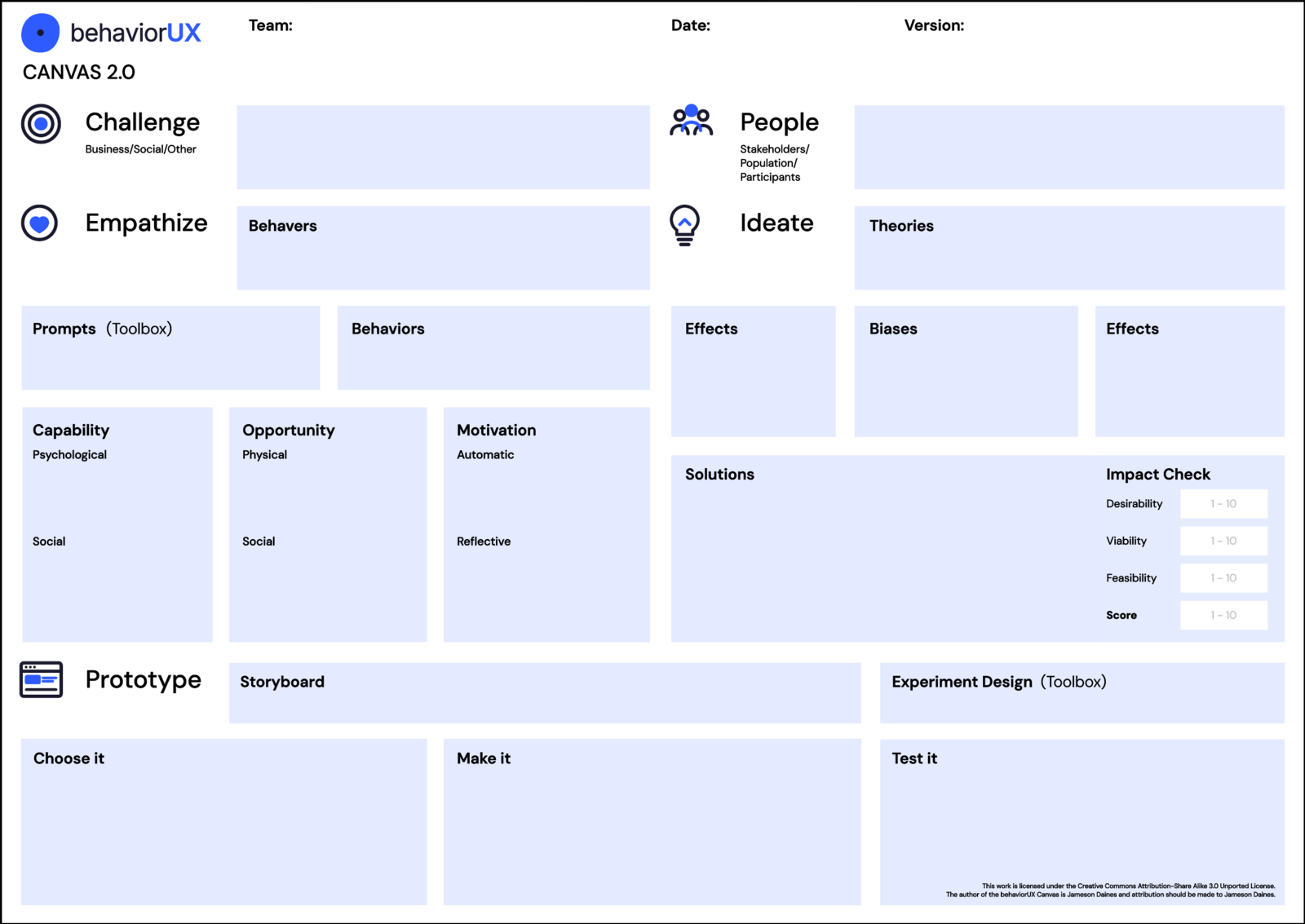
Impact
The canvas has been downloaded by individuals at top companies around the world including L'Oréal, Deloitte, IBM, Kimberly-Clark, Publicis Groupe, LUMA Institute, UNOPS, and Hill+Knowlton Strategies.